What came before design thinking?
Before the arrival of design thinking there were two main create-the-mew approaches: brainstorm then project manage, and creative problem solving.
Brainstorm then project manage
This primitive approach was widely employed before design thinking emerged – even in otherwise sophisticated organisations.
Sometimes the brainstorming part was nothing more than meeting participants advocating for their pet ideas, as seen in the TV show The Apprentice.
A method called Synectics was popular in the 1970s and 80s as an alternative to rules-based Osborn-style brainstorming.
In Europe the approach was propagated by Abraxas Management Resarch, founded in the early 1970s by Vincent Nolan, a former Rank Xerox senior executive. Clients included Unilever, Mars, British Gas, Pedigree Petfoods and Rank Hovis.
He went on to become the chairman of Synectics UK and the European managing partner of Synectics Inc., and published a series of books about the method, including Open to Change (1981) and The Innovator’s Handbook (1989).
Little is heard of Synectics these days.Synectics is more demanding of the subject than brainstorming, as the steps involved imply that the process is more complicated and requires more time and effort. The success of the Synectics methodology depends highly on the skill of a trained facilitator.
Wikipedia – Synectics
Creative problem solving
Alex Osborn and Sid Parnes introduced their Creative Problem Solving (CPS) Process in the 1960s.
Osborn oriinated the rules-based brainstorming method and founded Creative Education Foundation in 1954. When Osborn died in 1966, Parnes took over the chair.
Initially their CPS process consisted of five steps:
- Fact-finding
- Problem-finding
- Idea-finding
- Solution-finding
- Acceptance-finding
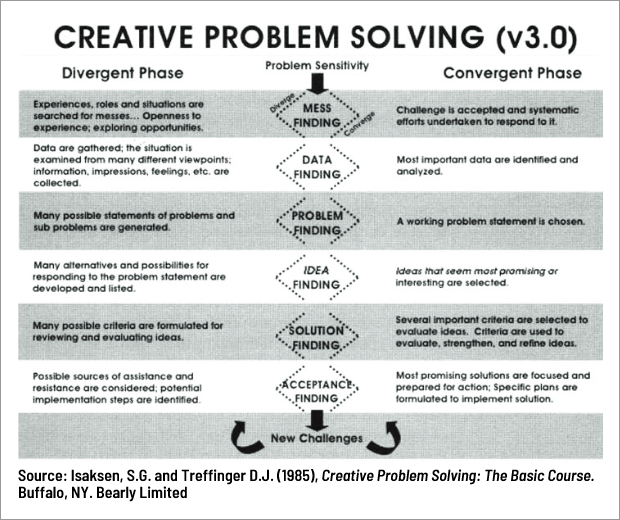
Osborn Parnes Creative Problem Solving Process
The approach was popularised by The Creative Problem Solving Group, Inc.
Founded by Isaksen and better known as known as Creative Problem Solving Buffalo or CPSB, the company developed a proprietary version of the CPS process, the popularity of which led to a licensing arrangement with the auditing and consulting firm Coopers & Lybrand (now PricewaterhouseCoopers).
Alas, the Osborn-Parnes model has been reduced to this:
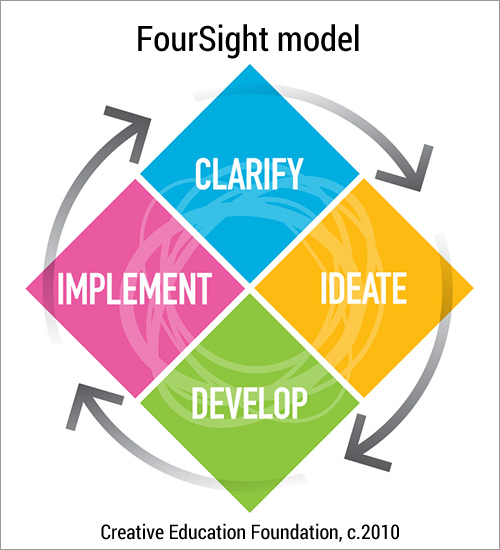
Learner’s Model based on work of G.J. Puccio, M. Mance, M.C. Murdock, B. Miller, J. Vehar, R. Firestien, S. Thurber, & D. Nielsen (2011) — view details
Design thinking: the fundamentals
In the 1990s, David Kelley and Tim Brown of the global design and innovation company IDEO brought together principles, concepts and methods that had been brewing for many years and distilled them into a unified concept they named design thinking.
Later they adapted the approach for business management and organisational change applications, working in partnership with renowned strategy exponent Roger Martin.
Design thinking consists of five non-linear, iterative phases (or kinds of work):
- Empathise (empathising)
- Define (defining)
- Ideate (ideating)
- Prototype (prototyping)
- Test (testing)
Others use different labels, or include additional phases, or both.
In 2022, IDEO adopted a six-aspect design thinking process: Frame a question; Gather inspiration; Generate ideas; Make ideas tangible; Test to learn; Share the story. The firm also talks about “the three core activities of design thinking: Inspiration, Ideation and Implementation”.
Design thinking is a broad approach, not a codified method
Design thinking refers to the set of cognitive, strategic and practical procedures used by designers in the process of designing, and to the body of knowledge that has been developed about how people reason when engaging with design problems. Design thinking is also associated with prescriptions for the innovation of products and services within business and social contexts.
Wikipedia: Design thinking
Although each entrepreneur, corporate team or consulting firm will practise design thinking in its own way, using methods of its own choosing, a design thinking project generally displays the following characteristics:Design thinking is both an ideology and a process that seeks to solve complex problems in a user-centric way.
It focuses on achieving practical results and solutions that are:
- Technically feasible: They can be developed into functional products or processes;
- Economically viable: The business can afford to implement them;
- Desirable for the user: They meet a real human need.
Source: What is Design Thinking Process? by Nasir Ahmed
Jump ahead to read more
- The needs and concerns of the intended customers or users are kept to the fore.
- Work is undertaken by a multidisciplinary team.
- Work is iterative.
- Experimentation is encouraged. Prototyping and testing begin early.
- There are multiple periods of diverge-converge work. Some practitioners refer to each period as a diamond — see for example the Design Council’s Double Diamond framework.
- The primary method for producing ideas is brainstorming or one of its derivatives.
The rigateur’s approach is a good fit with design thinking
The rigateur’s philosophy in brief
- We are here to enrich the world. Our common purpose is creating that which generates value for others.
- We are fully equipped in mind, body and spirit for doing this work.
- The essence of a successful create-the-new project is a high potential idea derived from a vision of realised potential.
- The vision of realised potential and the high potential idea are brought forth by natural imagining (an activity), and not by synthetic imagination (an abstraction). Brainstorming and other contrived methods employ synthetic imagination.
- A high potential idea is conceived in the mind of a single individual, not in some fanciful group mind.
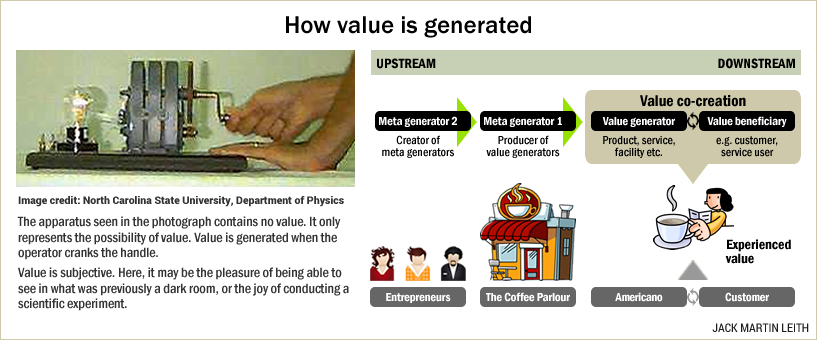
- Value is generated through the interaction between the value beneficiary (such as a customer or user) and the value generator (product, service, facility etc). View graphic
- Not only are upstream imagination and downstream value realisation equally important – they are inseparable.
- Rigateurs design create-the-new projects with the aim of generating value that is extensive (widespread) or exceptional (hard or impossible to acquire by other means).
The philosophy in more detail
We are here to enrich the world. Our common purpose is creating that which generates value for others.
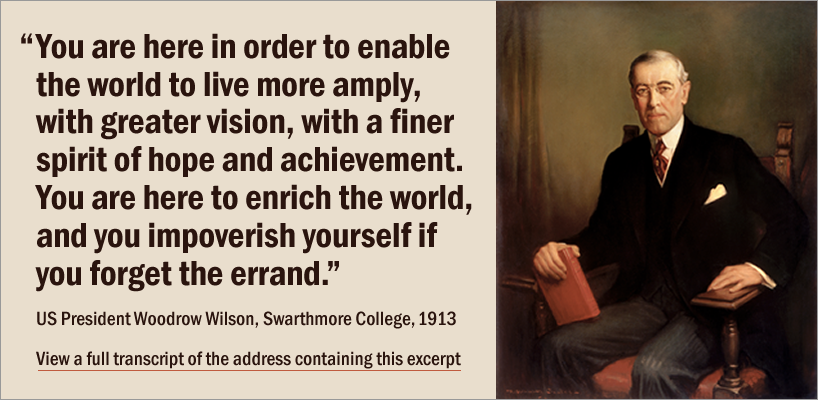
We are fully equipped in mind, body and spirit for doing this work.
 Theories, frameworks, models, processes and methods do not create anything.
The new comes into being through purposeful action, exemplified by the rigateur who deploys mind, body and spirit to create alone, create with others and help others create.
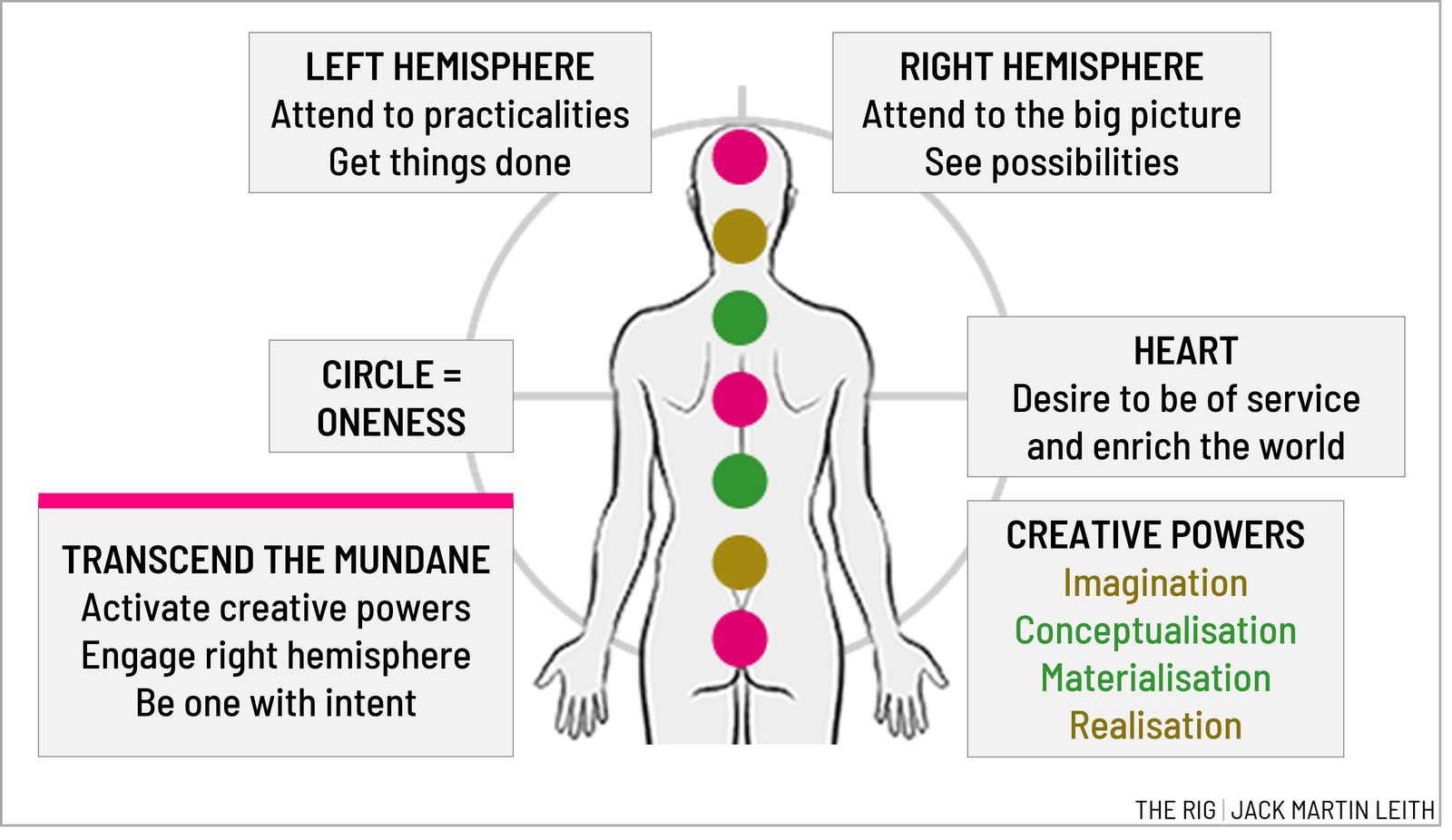
Read more about the rig
Find out how I identified the seven powers
The essence of a successful create-the-new project is a high potential idea derived from a vision of realised potential.
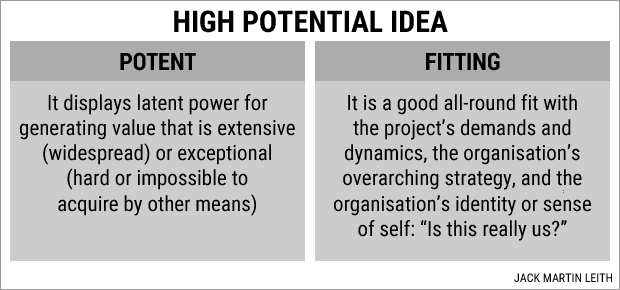
A high potential idea, one that’s potent and fitting, is derived from a vision of realised potential. This is a depiction — an actual picture accompanied by a vivid and compelling synopsis — of how the world will look, sound and feel when the new creation exists in its finished state (even though you do not yet know what form it will take) and its value generation potential is being realised without constraint.
The vision of realised potential and the high potential idea are brought forth by natural imagining (right hemisphere activity), not synthetic imagination (left hemisphere).
My understanding of the respective roles of the brain’s left and right hemispheres comes largely from the work of Dr Iain McGilchrist, author of The Master and His Emissary and The Matter With Things. The writings of Jill Bolte Taylor and Carlos Castaneda provided further insights.
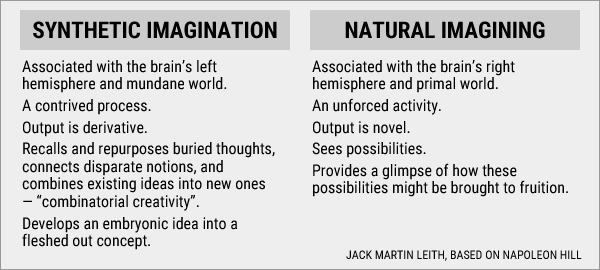
Natural imagining is deployed when undertaking imagination work. Synthetic imagination is deployed as part of conceptualisation work to develop the embryonic idea into a fleshed-out concept.
Read more about the two forms of imagination
A high potential idea is conceived in the mind of a single individual, not in some fanciful group mind.
Rigateurs recognise three action modes that are essential to fruitful create-the-new work:
- Create alone.
- Create with others.
- Help others create.
Create-the-new action modes | Part 1: Theory
Create-the-new action modes | Part 2: Practice
They do not use large group diverge-converge methods such as brainstorming or one of its derivatives.
Generating 2,000 ideas is rather like making 2,000 keys in the hope that one of them will fit the lock.How many ideas does it actually take to arrive at a great one? In our experience, the answer is something on the order of 2,000. Yes, that’s a two with three zeros after it — 2,000-to-1. We call this the Idea Ratio.
Two Stanford Professors Explain How to Produce Hundreds of World-Changing Ideas In 1 Hour, by Jeremy Utley and Perry Klebahn, codirectors of executive education at Stanford’s Institute of Design (d-school)
Rigateurs reject brainstorming, instead imagining a value generation possibility and then deploying the Idea-to-Concept method to conceive and develop a creation that will generate the imagined value.
Explore further
Value is generated through the interaction between the value beneficiary (such as a customer or user) and the value generator (product, service, facility etc).
A value generator is something tangible or intangible that generates value when the user interacts with it.
Some examples:
- Product
- Service
- Facility (this website, for instance)
- Event (conference, party, festival)
- Establishment (museum, theatre, restaurant)
- Infrastructure (railway station, railway line)
- Educational programme (course, seminar, workshop)
- Artistic work (book, song, musical composition, painting, theatrical production)
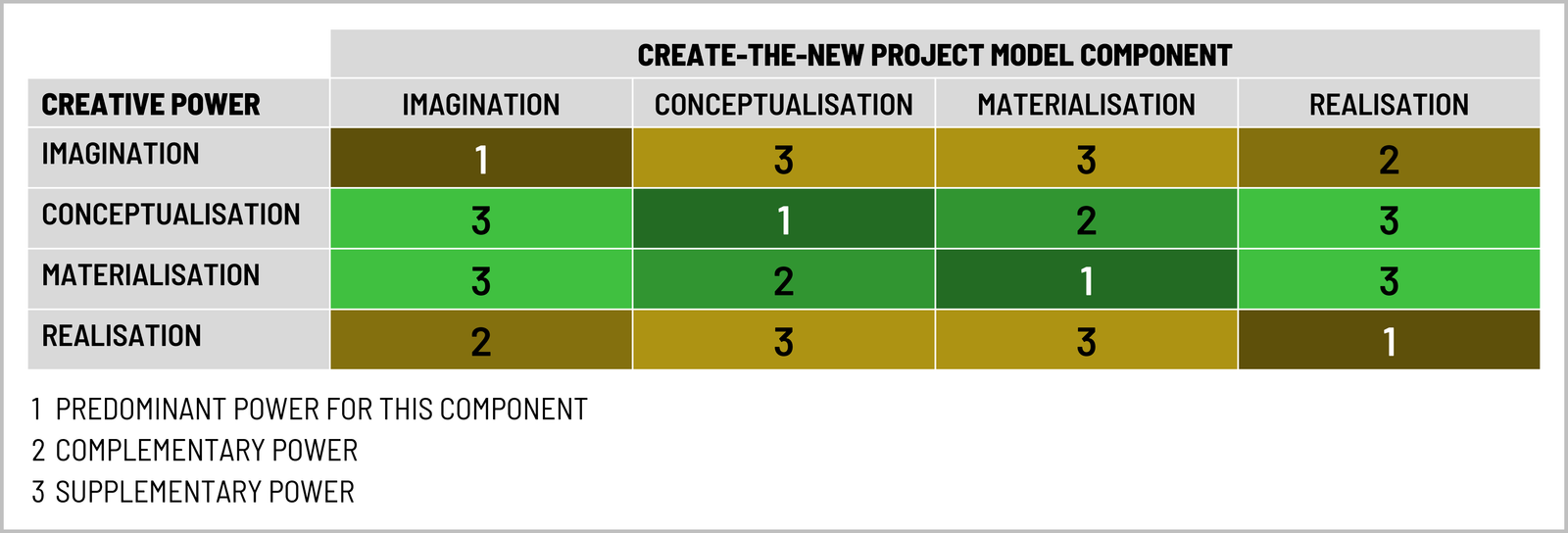
Not only are upstream imagination and downstream value realisation equally important — they are inseparable.
Rigateurs begin with the end in mind and end with the beginning in mind.
The next image shows the power of Imagination paired with the power of Realisation. The rigateur imagines the value that will be generated downstream and realises the value that was imagined upstream.
Rigateurs design create-the-new projects with the aim of generating value that is extensive (widespread) or exceptional (hard or impossible to acquire by other means).
Rigateurs consider the needs and interests of all potential beneficiaries (or stakeholders, if you prefer).
Thinking about each beneficiary group in turn, they determine what new value might be generated, what existing value must be preserved, what anti-value generation must be halted, and what value must be sacrificed for the good of the whole.
Those suffering the loss of value may need some form of compensation. If nothing else, the loss must be acknowledged and the reasoning explained.
Explore further
How to specify the value your new creation is intended to generate
Would the work of a rigateur generate more value than that of a design thinker?
Design thinking is a form of human-centred design. The marriage of design thinker and rigateur elevates human centricity to a higher plain.
Not only is greater value experienced by downstream beneficiaries, but the rigateurs benefit also, experiencing greater meaning, joy and fulfilment as they go about their work.
Plugging the gaps in the generic design thinking framework
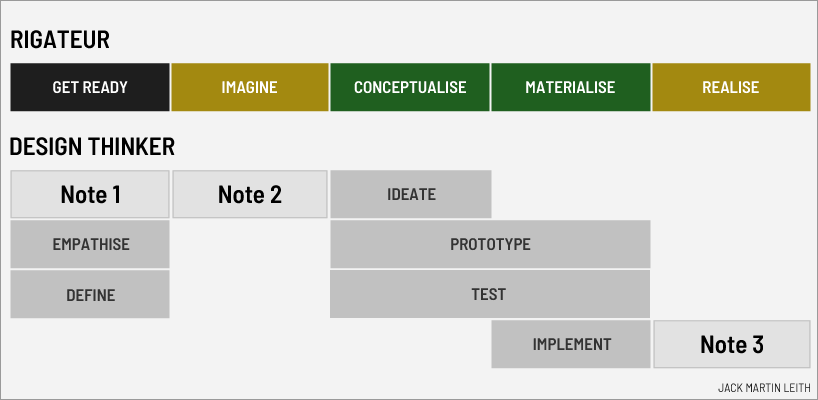
Note 1: Readiness work enables rigateurs to get upstream of the brief, immerse themselves in the project’s demands and dynamics, ensure that the project is consistent with the organisation’s purpose and strategy, and establish shared intent. This work goes far beyond empathising and defining.
Read more about Readiness work
Note 2: Rigateurs deploy natural imagining (accessed via the brain’s right hemisphere), whereas design thinking practitioners rely on brainstorming and synthetic imagination (left hemisphere).
Read about Iain McGilchrist and his brain lateralisation hypothesis
Note 3: Design thinking is concerned only with upstream work – the early stages of a create-the-new project. Rigateurs start upstream (even upstream of the design thinker’s upstream) and stay with the project all the way through to the downstream realisation of value generation potential.
The five tests
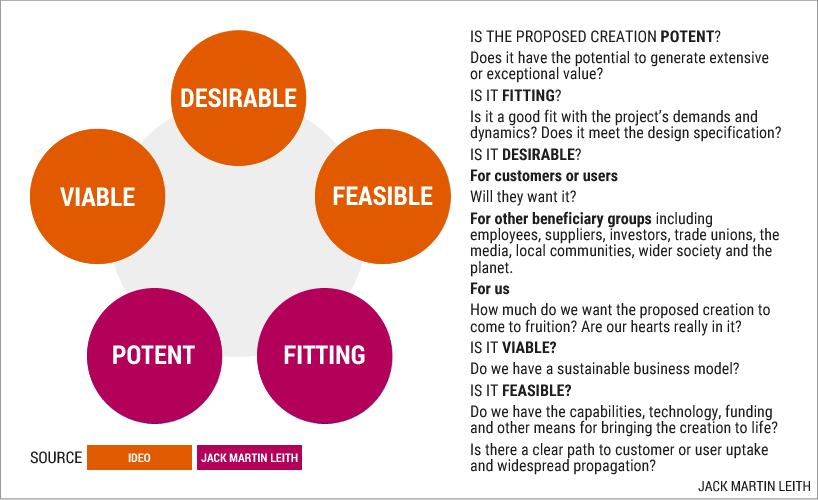
The global innovation firm IDEO popularised the three lenses concept represented by the orange discs. The lenses are labelled Desirability (Will people want it?), Feasibility (Can we make it and market it?) and Viability (Do we have a sustainable business model?).
As well as expanding the scope of desirability, I have added a two further items:
Potency
- Does it (still) display the potential to generate extensive (widespread) or exceptional (hard or impossible to acquire by other means) value?
Fitting
- Is it (still) a good fit with the demands and dynamics of the project?
- Does it (still) meet the design specification?
Explore further
External sources
10 Insightful Design Thinking Frameworks: A Quick Overview, by Rikke Friis Dam and Teo Yu Siang, on Interaction Design Foundation website
Design Thinking 101, by Sarah Gibbons, on Nielsen Norman Group website
Design thinking was supposed to fix the world. Where did it go wrong? by Rebecca Ackermann in MIT Technology Review
This website
The rig explained in 36 slides
Search the site
Not case sensitive. Do not to hit return.